
North Suffolk Community Services helps more than 10,000 children, families and individuals each year find and stay on a personalized path toward their greatest potential. Here are a few of their stories.
Leo
Leo
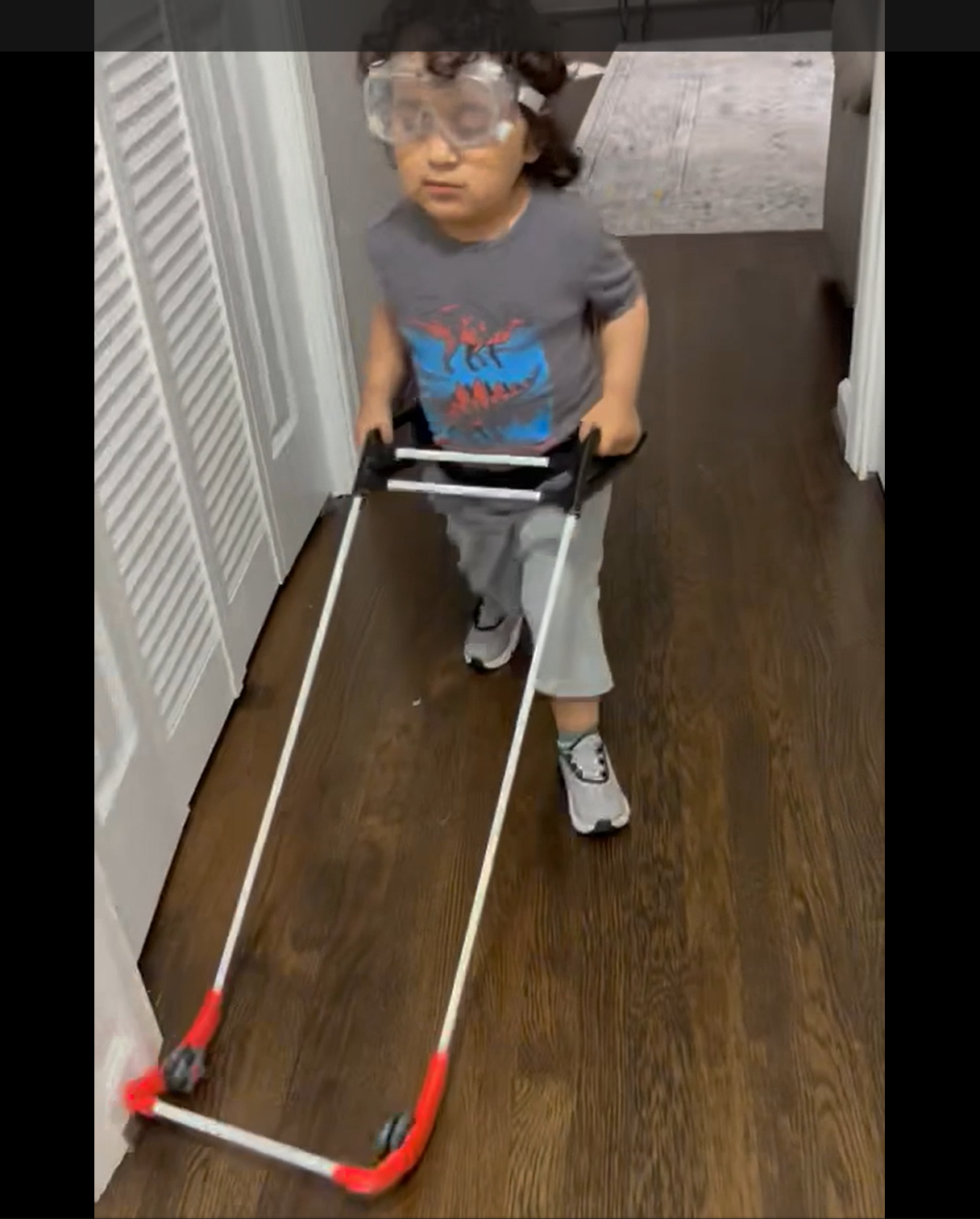
When Leo first came to North Suffolk’s Harbor Area Early Intervention Program, he was almost 2 years old, but just beginning to crawl. Born with a congenital condition that has slowly taken his vision since birth, Leo had developed his own special way of moving. He shuffled forward on his hands and knees in tiny half-inch movements so he would not bump into anything. It was both cautious and endearing, showing his determination and creativity even at such a young age.
With the help of his devoted parents and his Early Intervention team, Leo began learning to pull himself up and take supported steps. Still, he was hesitant to hold his parents’ hands or use a walker, preferring to rely on his own careful methods. At 2 1/2, he began to take independent steps, but his reluctance to reach out or explore with his hands made it hard for him to move confidently through the world.
That is when his team discovered an innovative mobility tool called a belt cane from Safe Toddles, designed to help children with visual impairments safely navigate their surroundings. Unfortunately, the device was not covered by insurance, and the family could not afford it on their own. NSCS was able to secure funding to step in and ensure Leo received the device he needed to thrive.
When the belt cane arrived, Leo’s team expected he might need time to adjust. But the moment they fastened it around his waist, Leo lit up. Without hesitation, he began walking confidently up and down the hallway, the bar protecting him from obstacles and giving him the freedom to move safely on his own. Within minutes, it was clear something had changed.
At their next visit, Leo and his team took the belt cane outside to the playground. There, Leo raced across the open space, exploring independently for the first time. When his mother offered to help, Leo smiled, moved her hands away, and kept going. His confidence and joy were unmistakable.
Now 3 years old and ready to begin preschool, Leo has graduated from Early Intervention. Thanks to the dedication of his family, his Early Intervention team, and the generosity of supporters who make NSCS programs possible, he is stepping into his next chapter with independence and courage.
Stories like Leo’s remind us why community support is so vital. Donor contributions allow NSCS to go beyond what insurance covers, ensuring every child has the opportunity to grow, explore, and reach their full potential. With your help, we can continue providing the tools, therapies, and resources that help children like Leo find their way in the world.
Donate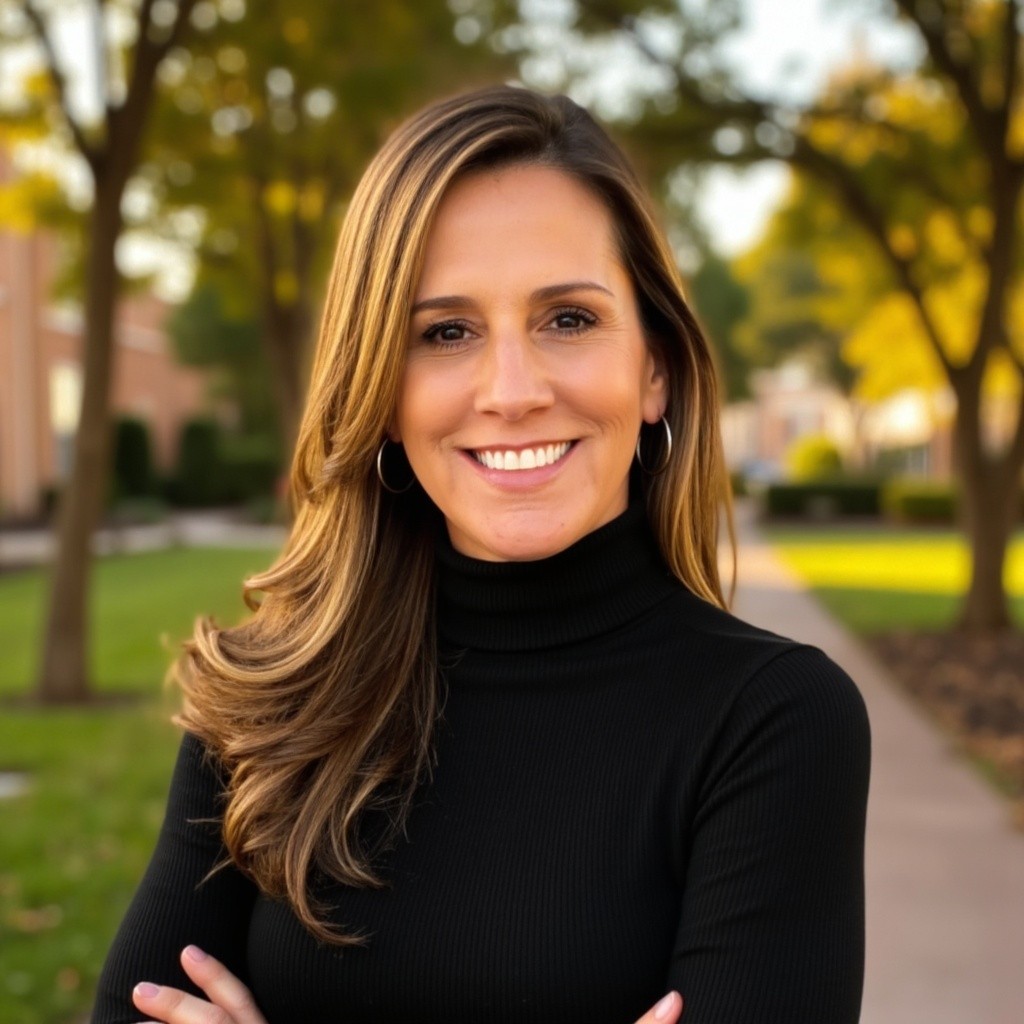
Yvonne Castañeda
Yvonne Castañeda
Serving on the board of North Suffolk Community Services is meaningful to me in a way that goes far beyond professional responsibility. As a therapist working with Latine/Hispanic families, I witness every day how much pain people carry silently, and how often that pain is misunderstood, minimized, or ignored. I also know what it feels like from the inside. There was a time in my life when I was hurting so deeply that I didn’t have the capacity to see how my pain spilled into the lives of people I loved. My own battles with anxiety, depression, an eating disorder, and alcohol addiction impaired my ability to see the people I claimed to love with compassion and understanding. I couldn’t love them in the way they deserved because I was too lost inside my own suffering.
When I finally began to heal, everything shifted. I could love people in the way I had always wanted to: with presence, patience, and a softness I hadn’t been able to access. Healing didn’t just transform my life; it transformed my relationships. And that is when I had a profound realization: when one person in a system begins to heal, a ripple moves through everyone connected to them. Doors open, patterns shift, families breathe differently. Healing isn’t just personal…it’s communal.
That belief anchors everything I do, and it is why I choose to serve on this board. I care about this work because I know what it costs to suffer without support, and I know what becomes possible when someone finally receives the care they deserve. North Suffolk provides that space for so many people, and I believe profoundly in the mission, the services, and the humanity behind them. Serving on the board is not just service – I give from a place of gratitude, of responsibility, and hope. It is a way of honoring the journey that saved my life and standing alongside others who are still finding their way forward.
Donate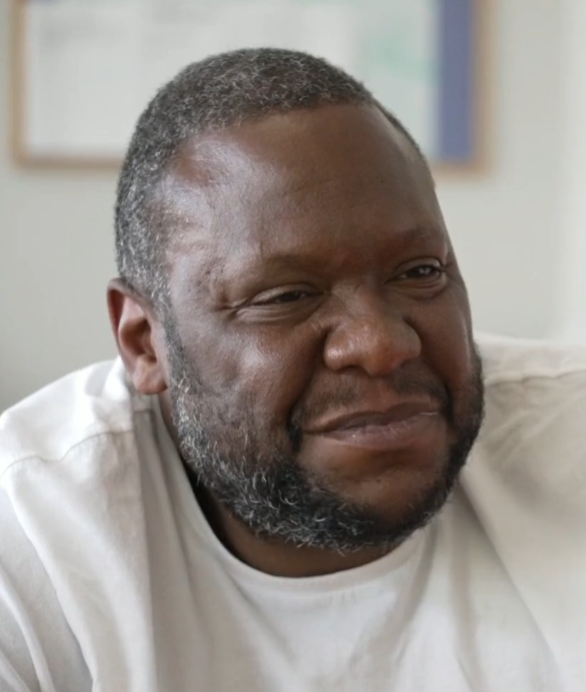
Corey Morris
Corey Morris
I struggled with addiction for most of my life. There was a point when I was homeless—sleeping on benches, not showering, and only caring about my next fix to escape the pain I was carrying. I honestly thought maybe this was it for me—that I was meant to live that kind of life.
Coming to the Meridian House changed that. It gave me the chance to really face my issues and start taking my life seriously. The relapse prevention groups and coping skills groups taught me so much. I learned that recovery isn’t just about not using—it’s about working on yourself, on your character, and understanding why you picked up in the first place. What makes Meridian special is the bond you build with people. The counselors aren’t just doing a job—they truly care, they get to know you, and they help you in ways that are real.
To me, being clean means being productive, being happy, and not having the people who love me constantly worrying. After 16 months, I graduated from Meridian House. I went on to complete the trainings to become a Recovery Coach, and now I work at North Suffolk Community Services helping others who are facing the same struggles I once faced.
I’m also working on my GED through a program at Recovery on the Harbor, taught by a volunteer who’s also in recovery and gives her time to support others. Being surrounded by people who care and who believe in me has made all the difference in my life. And now, I want to be that person for someone else.
Donate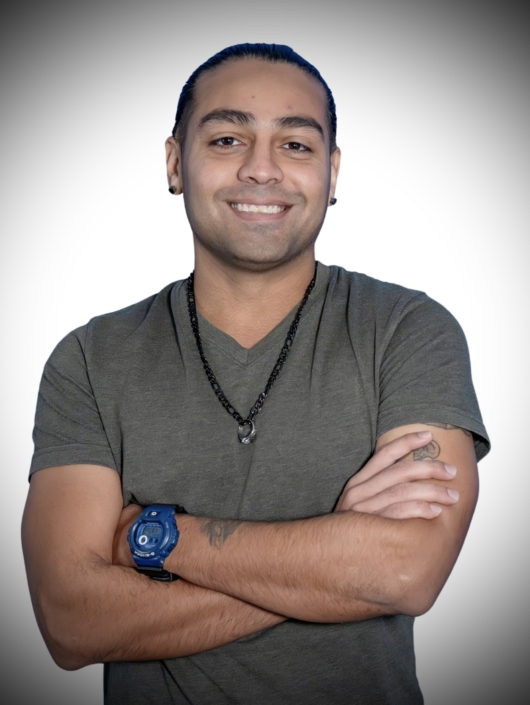
Michael Reyes
Michael Reyes
I am a child of immigrants. Until the age of four, my family was together—and those were the happiest years of my life.
But my father struggled with addiction, and his challenges tore our family apart when I was just a toddler. The separation was devastating. I spent most of my childhood carrying the weight of that loss, feeling lonely, worthless, misunderstood, and angry all the time.
By the time I was a teenager, heartbreak and hardship had become a normal part of my life. My family faced constant housing insecurity, and I became all too familiar with the pain of losing loved ones. To cope, I began suppressing my emotions and turning to unhealthy outlets like substance use. That’s when I built my façade—the mask I wore to survive. I got really good at pretending I was fine, even when I was falling apart inside. It never felt safe to let anyone see what was really happening.
I was the first in my family to go to college—a milestone I was incredibly proud of, but one that also came with heavy emotional weight. During that time, my father tried to reconnect with me, but his ongoing struggles led to his deportation and, eventually, his passing. I went emotionally numb for years after that.
Around the same time, my physical health began to decline. Without health insurance, I avoided doctors for most of my young adult life. When I finally sought care, I was diagnosed with a serious medical condition and immediately put on medication. I had never been more afraid for my life.
I managed to keep going—until I lost my lifelong best friend at just twenty-six years old. Giving his eulogy was the hardest thing I’ve ever done. After that, I spiraled into a deep, functioning depression. By day, I smiled and worked hard. By night, I was paralyzed—barely able to move, eat, or get out of bed on weekends. I was in pure survival mode, just trying to stay afloat. Eventually, I began to see the connection between my physical symptoms and my emotional pain.
That’s when I made the most important decision of my life: I decided I would save my life.
That meant reclaiming my mind, healing my heart, and caring for my body. I learned to self-advocate for my health and to access resources that supported my recovery. I had always been an athlete, but I needed more than physical strength—I needed emotional resilience. I changed my relationship with substances, began eating healthier, prioritized rest, and learned to express myself in new ways through counseling, journaling, and creating a vision board.
My vision board became my lifeline—filled with happy memories, affirmations, and reminders of my strength. On my hardest days, I would look at it and repeat: You are worthy. You will win. You will be happy. I would say it until I believed it enough to get out of bed and keep going.
My mind has always been my greatest tool, but for a long time, it worked against me. Through recovery, I learned how to reprogram my thoughts—to fight for myself instead of against myself. I’ve always been a fighter, and once I directed that strength toward healing, I refused to give up.
My lifelong mission has been to reclaim the happiness I felt as that four-year-old child. When I finally realized that surviving wasn’t enough—that I deserved to live—everything changed. My recovery journey inspired me to help others who are walking a similar path.
I see myself in the youth in our community—their pain, their potential, their resilience. I think about everything I needed at their age but didn’t have, and I want to be that source of support and hope for them. I remind them that they are not alone, that I believe in them, and I help them learn what took me years to figure out—how to access and navigate the resources that can change their lives.
That’s why I’m so passionate about advocating for mental health. It’s not just important work—it’s life-changing and lifesaving.
-Michael Reyes
Donate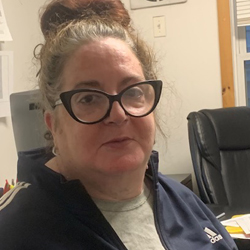
Rhonda Belissimo
Rhonda Belissimo
Crippled by depression and anxiety after her husband left, Rhonda Belissimo did not leave her bedroom for nearly 10 years. “My son took care of me for a whole decade,” Rhonda said. He moved in with her while she struggled hoping he could help her get better. During that time period Rhonda tried to take her own life 14 times. She returned to McLean Hospital so many times, the staff knew her. The last time she was there, her son and the hospital staff convinced her to go to North Suffolk Mental Health Association’s Independence House. That was 20 months ago.
Independence House is a 12-bed residential program located on Broadway in Chelsea for people with severe mental illness. Each one of the 12 residents, men and women, has a different and unique story – some have been here for years, while others for just a few months. The program is double staffed 24/7. Staff assist residents with cooking, activities of daily living, money management, medication administration, and anything else they might need.
Before she experienced agoraphobia, Rhonda had a great career as an Executive Assistant, owned her own homes, and by all accounts maneuvered through life quite well, even with a diagnosis of bipolar and PTSD at the age of 19. Rhonda, now 56, matter-of-factly says “I learned to live with it through medication and therapy. I did well enough to get through life.”
When Rhonda first got to Independence House she did not leave her room. Slowly though, she began to roam around the house, then she tried the front porch. When she got comfortable with that, Rhonda walked to a store. Now, she frequents Market Basket for groceries regularly. Recently, Rhonda went to the Museum of Science with her social worker, and a few months before that went to the Franklin Park Zoo with her housemates. “I’ve been doing things like a real person again,” Rhonda exclaimed, her voice filled with joy, and what seemed like a huge sense of relief.
A turning point toward wellness was when Rhonda began to let herself believe that other people really did love her. Today she has a beautiful and healthy relationship with her son, who she talks with every day. She FaceTime’s with her six year old granddaughter daily as well. Prior to Independence House, her granddaughter only ever saw her in her bedroom. “She is obsessed with me,” Rhonda says of her granddaughter, the joy of it obvious.
Today, 20 months after showing up at Independence House, Rhonda says, “I feel like I am wasting a room [at Independence House], I feel guilty that I’m taking up someone’s chance to get better here. I give all the credit to Chrissy and her team.”
Rhonda’s suicidal thoughts have abated. She has a strong and engaged care team. And Rhonda has loving and healthy family relationships. It is with this backdrop that Rhonda is giving up that room so someone else can benefit from caring team at Independence House.
Rhonda is moving into her own place but she won’t live there alone. She will be sharing her new home with her gray and white, green-eyed cat Leo.
Donate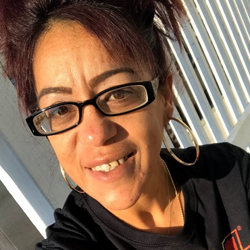
Rose Stone
Rose Stone
The power of example can be inspirational. It can be life changing, just ask Rose Stone. From the age of 14, until she was 30, Rose used drugs to get by. But in December 2014, she found her way to North Suffolk’s Meridian House and her life changed, for the better.
“My life was running around Mass Ave, getting high,” said Rose. “I had no structure, nothing of value. I had kids but I lost custody of all of them.” When she showed up at Meridian House she “came as is, just a broken person.”
Rose had no intention of going to treatment. Her husband was mandated to treatment as part of his probation, but wouldn’t go unless Rose went. And she did. After detox, Rose chose further treatment. She turned to her brother, who is sober, for help. Having gone through Meridian House himself, he helped her get in there.
“I told myself I was just going to complete this, if I want to go backwards when I finish, I can do that,” Rose told herself.
Rose appreciated all the guidance from staff and how they reflected all the things she wanted in life. For example, there were staff who had lost custody of their kids, and now regained custody. “It was powerful because someone who was in the exact same shoes as me was exactly where I wanted to be,” Rose said.
Rose graduated from Meridian in 2016, the same year her husband passed away. Despite this tragedy, she stayed sober. The outreach, love, and care she received from North Suffolk staff and others during that difficult time was extraordinary. Rose worked three jobs to make ends meet, she was a house manager at Campbell House in Revere, worked at Gavin Foundation, and also worked at a salad place.
In 2019, Rose accepted a Recovery Coach position at North Suffolk’s Recovery on the Harbor and soon she was promoted to Program Director.
Rose has a great relationship with her two boys, who were legally adopted a while back and received custody of her daughter about a year ago. “I don’t have to work three jobs now,” Rose said. Adding, “I can take my daughter and get her whatever she wants, I can even buy my son an iPhone.”
Donate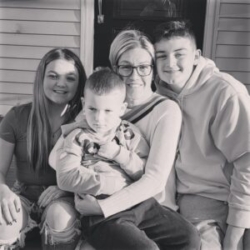
Katie O’Leary
Katie O’Leary
Katie O’Leary, Director of Recovery Support Services at North Suffolk Community Services is a certified Recovery Coach, as are 27 of her staff. This cadre of people have had various struggles with substance use disorder, and now live drug and alcohol free lives. Every day Katie shows up for work ready to provide support and guidance for people who are in recovery or on a path toward it. Katie is strong, confident and dependable. However, it has not always been the case.
Katie grew up in Charlestown and started drinking at a young age. “There were no consequences for drinking at 13,” Katie said. “I went through school and life and there were never any consequences for my actions.” It was socially acceptable, a rite of passage almost she said.
Then, in 11th grade, Katie’s parents took a trip to Alaska. Katie stopped going to school and she finally experienced consequences for her behavior. Given the option to stay back a year and go to Catholic school, she did. Katie stopped drinking, and her grades went up significantly. She was accepted to a number of good colleges, choosing UMass Amherst. Yet, Katie didn’t connect drinking with these experiences at the time, it is only in hindsight that she sees how it was related.
“It all went by so quick. Somewhere in college I transgressed. School was no longer important. My family, I could do without. And drugs and alcohol began to call all the shots,” Katie said. After three years, UMass Amherst “kindly” asked her to leave. “My life came to a screaming halt. No matter how far I walked, I got nowhere. I gave up on every dream, every goal, and every aspiration. I was broken. The only thing I cared about was more,” she added.
The next few years were chaotic. Heroin became Katie’s life. She lived in and out of detoxes, holdings, recovery homes, and jail. “This lifestyle became acceptable to me. Unnecessary risk after unnecessary risk, consequence after consequence, I would do anything to feel numb,” she said. Katie said that her children became innocent victims. “I had become so guarded and withdrawn that my own children were at the bottom of my priority list.”
Katie found her way to North Suffolk’s Intensive Outpatient Program. “I loved it there,” Katie said. “I did well there.” She said she met someone, fell in love, and got pregnant. Then, her husband started using. Katie followed suit. She lost custody of her son.
Eventually, Katie got arrested and her only option was treatment. She went to North Suffolk’s Meridian House. “Meridian House was the best experience of my life,” Katie said. However, she broke a number of rules, including becoming pregnant. She was asked to leave. This didn’t deter her desire for recovery though. She returned to North Suffolk’s IOP and stayed sober for two years. She gave birth to her daughter, began to reconnect with her son and she and her husband were doing well. Until he used and Katie followed.
Katie left her son with her in-laws but kept her daughter with her during this dark time. All that time out using she thought she was being a good mother. Until one day the cops showed up to arrest her husband. It was a cold and snowy day. Katie and her 18-month old daughter were crouched behind a bush. Her daughter, who had no coat, looked up into Katie’s eyes and said, “Mommy I am cold.” And that was it.
“In that moment I knew. I had a moment of surrender. I believe God works through people and on that cold day in January, I believe he worked through my daughter. I felt a sense of relief,” Said Katie
Katie went to a treatment center for pregnant/parenting mothers, then a transitional housing program for two years. While there her husband ended up relapsing, yet this time she stayed sober. She attended the Recovery Coach Academy but didn’t do anything with it right away. Until one day North Suffolk’s Director of Addiction Services was looking for a Recovery Coach. Katie interviewed and has been working at North Suffolk ever since.
Today Katie, sober more than 12 years, her ex-husband, sober 8-plus years, and Katie’s boyfriend and father to her youngest, sober more than 10 years, all co-parent their three children in a loving and open way. “By aiding me in my time of need and providing services and support throughout my journey, North Suffolk has positively impacted me and my children. And for that, I will be forever grateful,” said Katie.
Donate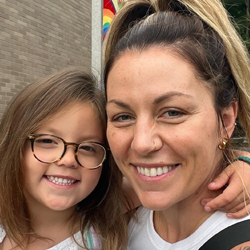
Caitlin Gillespie
Caitlin Gillespie
There are times that one’s life seems to come full circle. Caitlin Gillespie, North Suffolk Community Services’s, Services over Sentencing (SOS) Project Coordinator and Recovery Coach Supervisor can readily attest to that. There was a time she feared courtrooms she now works in helping others. Rightfully so.
In September 2016 Caitlin was homeless, living under the Zakim Bridge, addicted to heroin and stealing to support her habit. At the end of that September, Caitlin was arrested for petty larceny. During the booking she learned she was three months pregnant then was escorted into South Bay Jail.
Caitlin was assigned to the Charlestown Drug Court and went into a Women’s and Children’s Program. “I was pregnant there and gave birth there,” she said. Caitlin was also assigned a Recovery Coach who supported her and consistently reached out.
In and out of programs and half-way houses since 2007, Caitlin credits Recovery Coaching with her success this time around. “I had never heard of, nor had a recovery coach until the Charlestown Drug Court,” said Caitlin.
Caitlin’s Opioid use began in college. “When I got to college I drank a lot, but didn’t really know anything about drugs” she said. And then one day in 2004, someone offered her an Oxycotin. Despite her opioid use college, Caitlin managed to graduate from UMass Amherst with a Bachelor in Business Management. However, eventually her Oxycotin use led to heroin, which then led to 12 years of a spiraling addiction.
When Caitlin graduated from the Charlestown Drug Court in 2018, she received a call from Katie O’Leary, Director of Recovery at NSCS, asking if she’d like a job as a recovery coach. Since then, Caitlin has been promoted numerous times and has developed strong relationships with judges and offenders alike.
Caitlin recently purchased and moved into her first home and in May 2023, she will graduate from nursing school. She plans to continue on in her nursing education to obtain an MSN. She says will most likely stay on at NSCS as she ventures into a new career in nursing. “My experience at NSCS came in handy during my nursing clinicals,” she said. Adding, “my work here has given me a different perspective on people.”
Catlin is especially grateful for her recovery this time of year. “Family memories and gratitude are at the top of my wish list every year for the holidays, she said. “I spent too many years alone and full of despair and lucky for me my recovery gave me another chance at life. I never take for granted the special moments I now get to spend with the beautiful family I’ve been able to create and be present for my recovery.”
Donate


